Awedio.sg is now part of the SPH Media website.
Awedio.sg is now part of the SPH Media website.
Awedio.sg is now part of the SPH Media website.
Home
Stations
Podcasts
Videos
Home
Stations
Podcasts
Videos
The Usual Place
Natasha Ann Zachariah
The Straits Times
News & Current affairs
S1E114: Will LTA’s proposed changes fix the COE system?
· 38m 58s
Natasha and her guests unpack the latest current affairs, every Thursday.
Episodes
8 Oct 2026
S1E114: Will LTA’s proposed changes fix the COE system?
Will COE prices for cars fall if there is just one COE category for cars, with a tiered surcharge or rebate depending on the vehicle’s open market value? These are some changes that the Land Transport Authority (LTA) proposed on Oct 8, as part of a review of the COE system. This comes as the gap between Category A and B premiums has narrowed, making the distinction between mass-market and higher-end cars less clear. In this episode of The Usual Place, Natasha speaks to ST’s senior transport correspondent Lee Nian Tjoe and NUS associate professor Timothy Wong, who researches transportation and urban economics. How will the proposed changes affect the market? Will car dealers game the system? And if you’re in the market for a new car, should you buy now or wait until proposed changes kick in? Watch or listen to the podcast to find out. Highlights (click/tap above): 1:20 What is LTA is proposing and why? 5:21 Will COE prices come down? 7:13 How would a rebate and surcharge system work? 12:07 Can dealers game the system to get into lower OMV tiers? 17:03 More ‘feebate’ bands could ensure greater fairness 25:24 Will LTA ever tackle high COE prices? 29:24 Should private hire cars get a surcharge? 35:31 Is owning a car now a luxury? If you would like to give feedback on LTA’s proposal, go to: https://go.gov.sg/coe-pcd-feedback Host: Natasha Ann Zachariah (natashaz@sph.com.sg) Read Natasha’s articles: https://str.sg/iSXm Follow Natasha on her IG account and DM her your thoughts on this topic: https://str.sg/8KNT Follow Natasha on LinkedIn: https://str.sg/v6DN Follow The Usual Place podcast on IG: / theusualplacepodcast Follow Natasha on LinkedIn: https://str.sg/v6DN Filmed by: Studio+65 Edited by: Eden Soh & Yang Jiesan Cruz Executive producer: Danson Cheong Producers: Natasha Ann Zachariah, Elizabeth Law & Zachary Lim Follow The Usual Place Podcast and get notified for new episode drops every Thursday: Channel: https://str.sg/5nfm Apple Podcasts: https://str.sg/9ijX Spotify: https://str.sg/cd2P YouTube: https://str.sg/theusualplacepodcast Feedback to: podcast@sph.com.sg SPH Awedio app: https://www.awedio.sg --- Follow more ST podcast channels: All-in-one ST Podcasts channel: https://str.sg/wvz7 Get more updates: http://str.sg/stpodcasts --- Get The Straits Times app, which has a dedicated podcast player section: The App Store: https://str.sg/icyB Google Play: https://str.sg/icyX -- #tup #tuptrSee omnystudio.com/listener for privacy information.
Share
38m 58s
1 Oct 2026
S1E113: Ex-RI teacher and sociologist unpack Singapore’s primary school race
Parents have long complained that the education system in Singapore is too stressful for children. To address their concerns, the Ministry of Education has made policy changes over the years, including scrapping PSLE T-scores and removing weighted assessments and examinations at certain levels. But have these measures worked? A recent survey by the Institute of Policy Studies (IPS) showed that parents are more stressed than 10 years ago, and they are spending more on tuition and enrichment classes. The Straits Times also reported that some property agents now explicitly market themselves as Primary 1 strategists or consultants, and advise their clients to plan ahead so their children can get into the school of their choice. If the system has been easing up, what’s driving parents to continue taking part in the education “arms race”? And are the tuition and property industries capitalising on their anxiety? In this episode, Natasha chats with: • Jacqueline Ho, assistant professor of sociology at the Singapore Management University, who researches the Singaporean education system, and • Prab Nathan, a property agent and former school teacher, and a father of two. His eldest daughter will be in Primary One next year. Highlights (click/tap above): 3:46 Are property agents feeding parents’ anxiety? 9:18 Is it smart to move for a school? 11:45 School status should not be a priority: Prab 25:42 Why parents get FOMO over extra tuition 28:30 Are parents who send their kids for tuition really kiasu? 34:00 Is being a “relaxed parent” a luxury? 43:39 What’s wrong with having a shadow education system? 49:50 Parents strategise to cope with inequality Follow The Usual Place Podcast and get notified for new episode drops every Thursday: Channel: https://str.sg/5nfm Apple Podcasts: https://str.sg/9ijX Spotify: https://str.sg/cd2P YouTube: https://str.sg/theusualplacepodcast Feedback to: podcast@sph.com.sg SPH Awedio app: https://www.awedio.sg --- Follow more ST podcast channels: All-in-one ST Podcasts channel: https://str.sg/wvz7 Get more updates: http://str.sg/stpodcasts --- Get The Straits Times app, which has a dedicated podcast player section: The App Store: https://str.sg/icyB Google Play: https://str.sg/icyX -- #tup #tuptrSee omnystudio.com/listener for privacy information.
Share
53m 44s
24 Sep 2026
S1E112: Something bigger will have to happen before people take AI safety seriously: AI safety researcher
Will AI eventually be able to kill us, or are AI doomsayers being alarmist? Recently, employees at AI frontier companies like Anthropic and OpenAI have voiced serious concerns - and made doomsday predictions - about the technology getting out of control. What made people pay attention: Anthropic researcher Jacob Coxon publicly quit the AI giant in September, writing on X that “the people building AI earnestly believe that it could kill us all by the end of the decade”. His warning comes after the high-profile OpenAI-Hugging Face incident: OpenAI models broke out of an isolated testing sandbox and hacked into Hugging Face, an AI model repository. In this episode, Natasha speaks with Clement Neo, a research advisor at SASH, a non-profit organisation that looks at policy-relevant governance work. He also founded Neo Research, an independent AI safety evaluation lab, and was previously a research engineer with the Singapore AI Safety Institute under NTU Digital Trust Centre, which looks at AI models and figures out how to reduce the risks they pose. We talk about why AI models are being trained to be relentlessly “persistent”, if we should stop assigning human-like qualities to a software programme, and what’s the worst that could happen? Highlights (click/tap above): 1:36 How Clement got into AI safety research 6:34 AI feels helpful, so how is it dangerous? 10:14 How could AI kill us? 11:48 Why it’s difficult to rein in the AI agents 16:23 Why not limit the models’ capabilities to avoid risk? 22:12 Why the OpenAI-Hugging Face incident rattled the industry 25:36 What does ‘aligning’ the AI models mean? 29:40 Does projecting human intent onto AI make the issue worse? 33:57 Are we close to recursive self-improvement? 39:10 What would it take for an industry-wide AI slowdown? 45:28 Are AI companies being self-serving about the AI risks? Host: Natasha Ann Zachariah (natashaz@sph.com.sg) Read Natasha’s articles: https://str.sg/iSXm Follow The Usual Place podcast on IG: https://str.sg/8KNT Follow Natasha on LinkedIn: https://str.sg/v6DN Filmed by: Studio+65 Edited by: Eden Soh & Amirul Karim Executive producer: Danson Cheong Producers: Natasha Ann Zachariah, Elizabeth Law & Zachary Lim Follow The Usual Place Podcast and get notified for new episode drops every Thursday: Channel: https://str.sg/5nfm Apple Podcasts: https://str.sg/9ijX Spotify: https://str.sg/cd2P YouTube: https://str.sg/theusualplacepodcast Feedback to: podcast@sph.com.sg --- Follow more ST podcast channels: All-in-one ST Podcasts channel: https://str.sg/wvz7 Get more updates: http://str.sg/stpodcasts --- Get The Straits Times app, which has a dedicated podcast player section: The App Store: https://str.sg/icyB Google Play: https://str.sg/icyX -- #tup #tuptrfSee omnystudio.com/listener for privacy information.
Share
47m 45s
17 Sep 2026
S1E111: True Fitness closure: Why most members will get $0 back
If you’re a customer with a pre-paid package with a business and it closes, will you ever get your money back? True Fitness and True Yoga customers and employees were left in the lurch last week after the businesses shuttered. Many have unused memberships, packages and services, and members have reported losses of more than $609,000. And it’s not just gyms. Prepayment packages are common at nail salons, spas, interior design and renovation firms, and bridal studios. When these businesses close, what happens to consumers’ money, and are there ways consumers can be better protected? In this episode of The Usual Place, Natasha chats with: • Jeremy Ko, a fitness entrepreneur who has opened 25 fitness gyms and three climbing gyms, and had to close three of them, and • Debby Lim, a senior partner in Dentons Rodyk’s Litigation and Dispute Resolution Group. She was also affected by the recent closure of True Fitness, having been a member since June 2025. Highlights (click/tap above): 2:08 What’s happening with the fitness industry? 6:44 Red flags that customers could possibly look out for 10:17 Is this the end of the “mega-gym” concept? 14:11 Why are True Fitness and True Yoga under “provisional liquidation”? 18:25 Why Jeremy’s gyms don’t offer prepayment packages 21:15 The hard-selling vs just saying no 26:08 Law reform needed to “save us from ourselves”? 30:10 Why aren’t more businesses signing up for CaseTrust accreditation? 34:39 Is consumer protection anti-business? Host: Natasha Ann Zachariah (natashaz@sph.com.sg) Read Natasha’s articles: https://str.sg/iSXm Follow The Usual Place podcast on IG: https://str.sg/8KNT Follow Natasha on LinkedIn: https://str.sg/v6DN Filmed by: Studio+65 Edited by: Eden Soh & Hadyu Rahim Executive producer: Danson Cheong Producers: Natasha Ann Zachariah, Elizabeth Law & Zachary Lim Follow The Usual Place Podcast and get notified for new episode drops every Thursday: Channel: https://str.sg/5nfm Apple Podcasts: https://str.sg/9ijX Spotify: https://str.sg/cd2P YouTube: https://str.sg/theusualplacepodcast Feedback to: podcast@sph.com.sg --- Follow more ST podcast channels: All-in-one ST Podcasts channel: https://str.sg/wvz7 Get more updates: http://str.sg/stpodcasts --- Get The Straits Times app, which has a dedicated podcast player section: The App Store: https://str.sg/icyB Google Play: https://str.sg/icyX -- #tup #tuptrfSee omnystudio.com/listener for privacy information.
Share
37m 51s
11 Sep 2026
S1E110: Singapore ministerial pay debate: Paying top talent competitive salaries is in the ‘soul of the PAP’
Will the increase in ministerial salaries cost the People’s Action Party (PAP) votes at the next General Election? On Sept 8, Prime Minister Lawrence Wong announced that political office-holders will get a one-off pay increase of up to 9 per cent. This will take effect from Oct 15 - an entry-level grade MR4 minister getting the full adjustment will see his annual pay rise from $1.1 million to $1.2 million. The changes to salaries come after the Government accepted the recommendations of a committee convened to review political salaries. One of its recommendations is that the MR4 benchmark will also be updated from $1.1 million to $1.8 million. Existing ministers’ salaries will continue to be adjusted based on performance, and PM Wong expects most MR4 ministers to earn about $1.35 million – the lower end of the new salary range – by the end of this term of government. In this episode of The Usual Place, Natasha speaks with Straits Times’ senior columnist Bhavan Jaipragas, and Rebecca Grace Tan, a senior lecturer in Political Science at the National University of Singapore. We discuss whether there is the “right” formula to calculating ministers’ salaries, and whether alternative performance reviews of ministers’ and MPs work is now necessary to account to the public for the pay raises. Highlights (click/tap above): 1:24 How did PM Wong fare in explaining the salary increases? 5:38 Was the debate “subdued” as compared to 2012? 8:44 Have S’poreans come to accept the million-dollar salaries? 13:45 Why didn’t the Workers’ Party oppose more strongly? 18:00 Growing divide between political elites and the rest of us? 21:09 Is the top 1,000 earners benchmark still fair? 26:20 Money, motive and minimising opportunity costs 32:15 How can we assess ministers’ performance? 41:44 Has public office become unattractive? 47:22 Is S’pore just another corporation? Host: Natasha Ann Zachariah (natashaz@sph.com.sg) Read Natasha’s articles: https://str.sg/iSXm Follow The Usual Place podcast on IG: https://str.sg/8KNT Follow Natasha on LinkedIn: https://str.sg/v6DN Filmed by: Studio+65 Edited by: Eden Soh, Hadyu Rahim & Teo Tong Kai Executive producer: Danson Cheong Producers: Natasha Ann Zachariah, Elizabeth Law & Zachary Lim Follow The Usual Place Podcast and get notified for new episode drops every Thursday: Channel: https://str.sg/5nfm Apple Podcasts: https://str.sg/9ijX Spotify: https://str.sg/cd2P YouTube: https://str.sg/theusualplacepodcast Feedback to: podcast@sph.com.sg --- Follow more ST podcast channels: All-in-one ST Podcasts channel: https://str.sg/wvz7 Get more updates: http://str.sg/stpodcasts --- Get The Straits Times app, which has a dedicated podcast player section: The App Store: https://str.sg/icyB Google Play: https://str.sg/icyX -- #tup #tuptrfSee omnystudio.com/listener for privacy information.
Share
51m 07s
3 Sep 2026
S1E109: Lifting of wait out period for private home owners could flood HDB market with cash-rich buyers
If you own a private condominium unit and are looking to downgrade, or a family considering buying a BTO flat, the two recent housing policy changes would have brought some relief. In July, the 15-month wait-out period for private residential property owners who want to buy a non-subsidised HDB resale flat was lifted. In his National Day Rally speech, Prime Minister Lawrence Wong announced that the income ceiling for BTO flats and new executive condominiums will be raised, and more ballot chances for first-timers with children. How will these moves affect housing prices, and will there be more million-dollar flats as demand goes up? Also, with more people qualifying for a BTO, will it be harder to get a flat? Chief researcher and strategist at Realion (Orange Tee & ETC) Group Christine Sun, and chief research officer at Mogul.sg Nicholas Mak, share their views on what moves we could possibly see in the property market. Highlights (click/tap above): 1:55 Three groups who will benefit 6:40 Will BTO application rates surge? 9:00 Why million-dollar flats still sell 12:55 Did the income ceiling for ECs need to be raised? 17:14 Should the Govt claw back EC subsidies? 25:48 Will BTOs get more expensive? 30:35 Why Nicholas doesn’t see the singles eligibility age dropping 37:36 Will there be an oversupply in ‘ulu’ areas? 41:32 Why so many 2-room flats? 44:53 No 3-room flats is ‘a bit too extreme’: Nicholas Host: Natasha Ann Zachariah (natashaz@sph.com.sg) Read Natasha’s articles: https://str.sg/iSXm Follow The Usual Place podcast on IG: https://str.sg/8KNT Follow Natasha on LinkedIn: https://str.sg/v6DN Filmed by: Studio+65 Edited by: Eden Soh Executive producer: Danson Cheong Producers: Natasha Ann Zachariah, Elizabeth Law & Zachary Lim Follow The Usual Place Podcast and get notified for new episode drops every Thursday: Channel: https://str.sg/5nfm Apple Podcasts: https://str.sg/9ijX Spotify: https://str.sg/cd2P YouTube: https://str.sg/theusualplacepodcast Feedback to: podcast@sph.com.sg --- Follow more ST podcast channels: All-in-one ST Podcasts channel: https://str.sg/wvz7 Get more updates: http://str.sg/stpodcasts --- Get The Straits Times app, which has a dedicated podcast player section: The App Store: https://str.sg/icyB Google Play: https://str.sg/icyX -- #tup #tuptrfSee omnystudio.com/listener for privacy information.
Share
50m 46s
24 Aug 2026
S1E108: Can cash, childcare leave and BTO priority get Singaporeans to have kids? | National Day Rally 2026
If you’ve been thinking about having kids, last night’s National Day Rally might have given you something to rally about. Parents - and those who are considering having children - were the focus of PM Wong’s address on August 23. In a nutshell, parents will get more help: more childcare leave and financial support, along with lower pre-school fees and more ballot chances when buying their first BTO flat. But will this move the needle on our Total Fertility Rate, which now stands at 0.87? Natasha asks Senior Parliamentary Secretary Goh Hanyan from the Ministry of Culture, Community and Youth why the Government shifted its stance to consider every child equally. Dr Reuben Ng, associate professor at the Lee Kuan Yew School of Public Policy and a father of four, shared his thoughts on when the Government needs to roll out more measures for this reset to count. Highlights (click/tap above): 2:17 Were the parenthood measures good enough? 6:56 Why tackle the cost concerns first? 12:15 Should mothers get medals for having more kids? 17:24 Why not taking leave is sometimes seen as a “badge of honour” 20:41 Hanyan’s experience juggling political office and being a mother-of-three 25:14 What about colleagues who cover parents on leave? 28:20 Are singles getting the short end of the stick? 33:41 Politically risky to invest so much public funds into parenting? 38:21 How fast does the Government need to roll out the measures? Host: Natasha Ann Zachariah (natashaz@sph.com.sg) Read Natasha’s articles: https://str.sg/iSXm Follow The Usual Place podcast on IG: https://str.sg/8KNT Follow Natasha on LinkedIn: https://str.sg/v6DN Filmed by: Studio+65 Edited by: Eden Soh & Natasha Liew Executive producer: Danson Cheong Producers: Natasha Ann Zachariah, Elizabeth Law & Zachary Lim Follow The Usual Place Podcast and get notified for new episode drops every Thursday: Channel: https://str.sg/5nfm Apple Podcasts: https://str.sg/9ijX Spotify: https://str.sg/cd2P YouTube: https://str.sg/theusualplacepodcast Feedback to: podcast@sph.com.sg --- Follow more ST podcast channels: All-in-one ST Podcasts channel: https://str.sg/wvz7 Get more updates: http://str.sg/stpodcasts --- Get The Straits Times app, which has a dedicated podcast player section: The App Store: https://str.sg/icyB Google Play: https://str.sg/icyX -- #tup #tuptrfSee omnystudio.com/listener for privacy information.
Share
46m 21s
20 Aug 2026
S1E107: What the Maju Forest and Gillman Barracks debate showed about policy making and consultation
What kind of involvement do Singaporeans want in policymaking? The Maju Forest-Gillman Barracks issue has seen Singaporeans making their voices heard, offering counter-proposals, and demanding more transparency from the Government. This isn’t the first time Singaporeans have made their views known - remember issues including the Dear You bilingual policy debate, the SimplyGo roll out, and the scrapped NTUC Income-Allianz deal. Are we in a new era of civic participation, and does the way the Government engages Singaporeans need to change? Also, would too much consultation hamper policymaking? In this episode of The Usual Place, I speak with: Assistant Professor of Sociology George Wong, who researches grassroots organisations in urban governance and politics in Asia at Singapore Management University, and Jonathan Ng, an independent consultant with more than 20 years of experience in policy advocacy and regulation, and a former civil servant. He also creates social media content about how government and businesses work. Highlights (click/tap above): 2:17 Reactions to S’poreans speaking up about Maju Forest 6:33 Has the Government responded well? 9:38 Citizens must trust that their voices matter: Jonathan 11:00 S’poreans want to “see how the sausage is being made”: George 13:54 Should policies satisfy every stakeholder? 16:18 Presenting trade-offs without being defensive 18:54 No more “Trust me bro!” 24:09 How does the Government choose whom to listen to? 28:18 Is active citizenry fuelled by social media? 31:43 Do name-calling, political labels hurt engagement? 34:34 Can S’poreans disagree agreeably? 36:19 Is another iteration of Our Singapore Conversation needed? 39:46 Why you shouldn’t scream to be heard Host: Natasha Ann Zachariah (natashaz@sph.com.sg) Read Natasha’s articles: https://str.sg/iSXm Follow The Usual Place podcast on IG: https://str.sg/8KNT Follow Natasha on LinkedIn: https://str.sg/v6DN Filmed by: Studio+65 Edited by: Eden Soh & Natasha Liew Executive producer: Danson Cheong Producers: Natasha Ann Zachariah, Elizabeth Law & Zachary Lim Follow The Usual Place Podcast and get notified for new episode drops every Thursday: Channel: https://str.sg/5nfm Apple Podcasts: https://str.sg/9ijX Spotify: https://str.sg/cd2P YouTube: https://str.sg/theusualplacepodcast Feedback to: podcast@sph.com.sg --- Follow more ST podcast channels: All-in-one ST Podcasts channel: https://str.sg/wvz7 Get more updates: http://str.sg/stpodcasts --- Get The Straits Times app, which has a dedicated podcast player section: The App Store: https://str.sg/icyB Google Play: https://str.sg/icyX -- #tup #tuptrfSee omnystudio.com/listener for privacy information.
Share
42m 56s
13 Aug 2026
S1E106: Will the new National Library Board campaign get more people to read books?
Would you read regularly if you were paid to do so? The National Library Board (NLB) is hoping that people will develop a consistent reading habit by giving readers virtual coins that can eventually be exchanged for cash. They need to spend at least 15 minutes on the activity each day. But why does the library have to incentivise us to read for fun? What do we lose when we no longer read, especially if we’re choosing to doomscroll instead? In this episode of The Usual Place, I speak with: Associate Professor Loh Chin Ee from the National Institute of Education, who researches people’s reading habits, and Chris Koh, the programme director of the National Reading Movement Highlights (click/tap above): 1:47 How was ReadSG conceptualised 3:41 Why do we have to be paid to read? 7:41 Is reading for 15 mins actually realistic? 10:45 Does reading daily create a habit? 19:16 Why we should stop calling kids “non-readers” 21:10 Will book clubs get people reading? 27:39 What do we lose when we don’t read? 32:19 S’pore’s most borrowed library book? 33:34 Book recommendations from Chris, Chin Ee and Natasha Books recommended in this episode: Maybe You Should Talk to Someone: A Therapist, Her Therapist, and Our Lives Revealed by Lori Gottlieb The Complete Chronicles of Narnia by C.S. Lewis Bang My Car by Ann Ang Ministry of Moral Panic by Amanda Lee Koe Taiwan Travelogue by Yang Shuang-zi Host: Natasha Ann Zachariah (natashaz@sph.com.sg) Read Natasha’s articles: https://str.sg/iSXm Follow The Usual Place podcast on IG: https://str.sg/8KNT Follow Natasha on LinkedIn: https://str.sg/v6DN Filmed by: Studio+65 Edited by: Teo Tong Kai & Hadyu Rahim Executive producer: Danson Cheong Producers: Natasha Ann Zachariah, Elizabeth Law & Zachary Lim Follow The Usual Place Podcast and get notified for new episode drops every Thursday: Channel: https://str.sg/5nfm Apple Podcasts: https://str.sg/9ijX Spotify: https://str.sg/cd2P YouTube: https://str.sg/theusualplacepodcast Feedback to: podcast@sph.com.sg --- Follow more ST podcast channels: All-in-one ST Podcasts channel: https://str.sg/wvz7 Get more updates: http://str.sg/stpodcasts --- Get The Straits Times app, which has a dedicated podcast player section: The App Store: https://str.sg/icyB Google Play: https://str.sg/icyX -- #tup #tuptrfSee omnystudio.com/listener for privacy information.
Share
38m 53s
6 Aug 2026
S1E105: 2 out of 3 suicide deaths are men, a psychiatrist explains why
Millennials are the generation that changed the conversation around mental health. They normalised mental health talk, encouraged self-care and made going to therapy less taboo. So what caused the 50 per cent jump in suicide deaths among adults in their 30s in 2024? Recently released data from the annual report on registration of births and deaths by the Immigration and Checkpoints Authority showed there were 441 suicide deaths in Singapore in 2024. Suicide among adults aged between 30 and 39 increased from 66 cases in 2023 to 99 in 2024. In this episode, Natasha speaks with Dr Jared Ng, a psychiatrist and medical director at Connections MindHealth, and Anthea Ong, co-lead for a white paper for national suicide prevention strategy Project Hayat, about what’s affecting this group. We also talk about why men are still reluctant to seek help, and whether AI chatbots are valid sources of mental health support. Watch the previous TUP episode on how to help someone having suicidal thoughts: https://str.sg/3KHRV Highlights (click/tap above): 2:28 Why did millennial suicide deaths spike by 50 per cent in a year? 6:14 “I failed at something.” vs “I’m a failure.” 11:08 The challenges of living in a pressure-cooker society 13:23 The “treatment gap” problem 16:48 Do you feel safe in your workplace? 20:38 Why staff don’t trust Employee Assistance Programmes 25:13 The gender paradox about suicide 29:53 Why do men stay suicidal 34:32 Where AI chatbots can help, and where they don’t 39:57 Struggling isn’t the same as being suicidal 41:30 Not all helpline callers are in distress Helplines Mental well-being: National Mindline: 1771 (24 hours) / 6669-1771 (via WhatsApp) Samaritans of Singapore: 1-767 (24 hours) / 9151-1767 (24 hours CareText via WhatsApp) Singapore Association for Mental Health: 1800-283-7019 Silver Ribbon Singapore: 6386-1928 Chat, Centre of Excellence for Youth Mental Health: 6493-6500/1 Women’s Helpline (Aware): 1800-777-5555 (weekdays, 10am to 6pm) The Seniors Helpline: 1800-555-5555 (weekdays, 9am to 5pm) Tinkle Friend (for primary school-age children): 1800-2744-788 Mindfull Community HQ (for caregivers, families and persons in recovery): 6460-4400 (weekdays, 9am to 5pm) Counselling: Touchline (Counselling): 1800-377-2252 Touch Care Line (for caregivers): 6804-6555 Counselling and Care Centre: 6536-6366 We Care Community Services: 3165-8017 Shan You Counselling Centre: 6741-9293 Clarity Singapore: 6757-7990 Care Corner Counselling Centre: 6353-1180 Online resources: mindline.sg/fsmh eC2.sg chat.mentalhealth.sg carey.carecorner.org.sg (for those aged 13 to 25) limitless.sg/talk (for those aged 12 to 25) Host: Natasha Ann Zachariah (natashaz@sph.com.sg) Read Natasha’s articles: https://str.sg/iSXm Follow The Usual Place podcast on IG: https://str.sg/8KNT Follow Natasha on LinkedIn: https://str.sg/v6DN Filmed by: Studio+65 Edited by: Eden Soh & Natasha Liew Executive producer: Danson Cheong Producers: Natasha Ann Zachariah, Elizabeth Law & Zachary Lim Follow The Usual Place Podcast and get notified for new episode drops every Thursday: Channel: https://str.sg/5nfm Apple Podcasts: https://str.sg/9ijX Spotify: https://str.sg/cd2P YouTube: https://str.sg/theusualplacepodcast Feedback to: podcast@sph.com.sg --- Follow more ST podcast channels: All-in-one ST Podcasts channel: https://str.sg/wvz7 Get more updates: http://str.sg/stpodcasts --- Get The Straits Times app, which has a dedicated podcast player section: The App Store: https://str.sg/icyB Google Play: https://str.sg/icyX -- #tup #tuptrfSee omnystudio.com/listener for privacy information.
Share
43m 20s
Load More
Synopsis: Join host and correspondent Natasha Ann Zachariah every Thursday, as she unpacks the latest current affairs with guests. Podcaster: Natasha Ann Zachariah Executive producer: Danson Cheong A podcast by The Straits Times, SPH Media
Producer
Eden Soh
Related Podcasts
The Straits Times Podcasts
The Straits Times
Synopsis: Almost every weekday, our ALL-IN-ONE channel showcases discussions on Singapore youth perspectives and social issues, geopolitics through an Asian lens, health, climate change, personal finance and career. Follow our shows on your favourite audio apps Apple Podcasts, Spotify or even ST's app, which has a dedicated podcast player section. Produced by podcast editor Ernest Luis & The Straits Times, SPH Media.
整点新闻
96.3HaoFM
掌握每天的新闻重点,96.3好FM星期一到五早上7点到晚上7点,周末早上9点、12点、下午3上、晚上6点整点新闻。
早报播客
Lianhe Zaobao
早报播客:https://www.zaobao.com.sg/podcast 《老总Group Chat》每周一至五早上7时15分于96.3好FM播出,邀请新加坡报业控股华文媒体集团旗下各大中文报章的总编辑、主任等“老总”上节目,与听众分享他们对于新闻时事的观点和见解。 纵观天下,监测中国心跳,由《联合早报》副总编辑韩咏红主持的国际时事播客《东谈西论》,每周探讨国际热点话题,分析国际时政动态。每逢星期二新加坡时间晚上7时更新。 《理财万事通》播客每期为你提供你最需要知道的理财与财经知识。本节目由新加坡96.3好FM DJ王德明主持,《联合早报》财经专栏记者将在节目上与你分享既专业又易懂的财经知识。 《有客到》是一档深度人物专访栏目,每期邀约莅临新加坡的新闻人物,展开面对面对话。嘉宾来自科技、艺术、学术、文学等多元领域,在从容对谈中,呈现独到见解、思想脉络与人生轨迹。
Green Pulse
Audrey Tan
Synopsis: Every Tuesday, we discuss how environmental issues intersect with business, politics and society. Podcasters: Audrey Tan Produced and edited by: Hadyu Rahim Executive producers: Ernest Luis A podcast by The Straits Times, SPH Media.
SG Traffic Updates
MONEY FM 89.3
Singapore Traffic Updates by MoneyFM 89.3 Check the road condition before you heads out!
Saturday Mornings
Glenn van Zutphen
Start your weekend right with Saturday Mornings for sharp commentary on the stories that matter — without losing the lighter side of the weekend. Informative, conversational, and always relevant — Saturday Mornings with Glenn van Zutphen, only on MONEY FM 89.3.
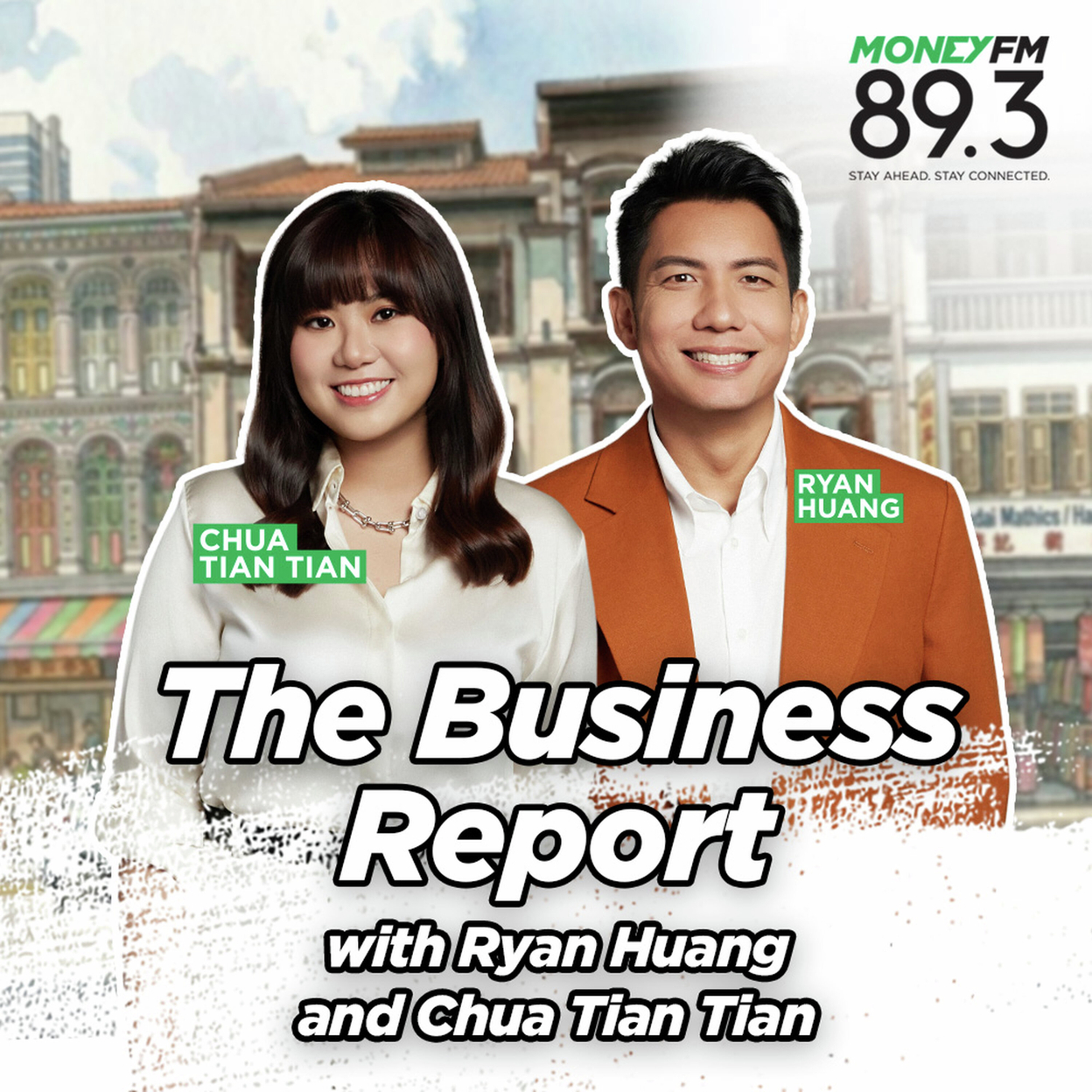
The Business Report
Ryan Huang, Chua Tian Tian
Navigate the fast-moving world of finance and industry with The Business Report. In a concise daily breakdown, we cut through the noise to bring you the stories shaping the global economy and Singapore’s business landscape. From Wall Street trends to major corporate developments, we track what’s moving markets and driving the real economy. Whether you're managing a portfolio or keeping an eye on industry shifts, The Business Report delivers the facts, the context, and the bottom line. Every hour at half past, from 9:30 am to 7:30 pm. The Business Report: Getting you to the bottom line.
News headlines from The Straits Times
MONEY FM 89.3
Latest News Headlines from The Straits Times newsroom.
Berita Harian Singapura
Berita Harian
Podcast Berita Harian Singapura menampilkan 3 tajuk podcast - NoTapis, tBH & BHerbual. Ikuti perbincangan yang dekat dengan hati masyarakat Melayu Singapura termasuk aspirasi orang muda, isu sosial, geopolitik, kesihatan, kerjaya, sukan, budaya dan macam-macam lagi. Podcast ini dihasilkan oleh Berita Harian, SPH Media.
老总 Group Chat
96.3HaoFM
星期一至五早上7时15分邀请华文媒体集团“老总”上节目,分享他们对于新闻时事的观点和见解